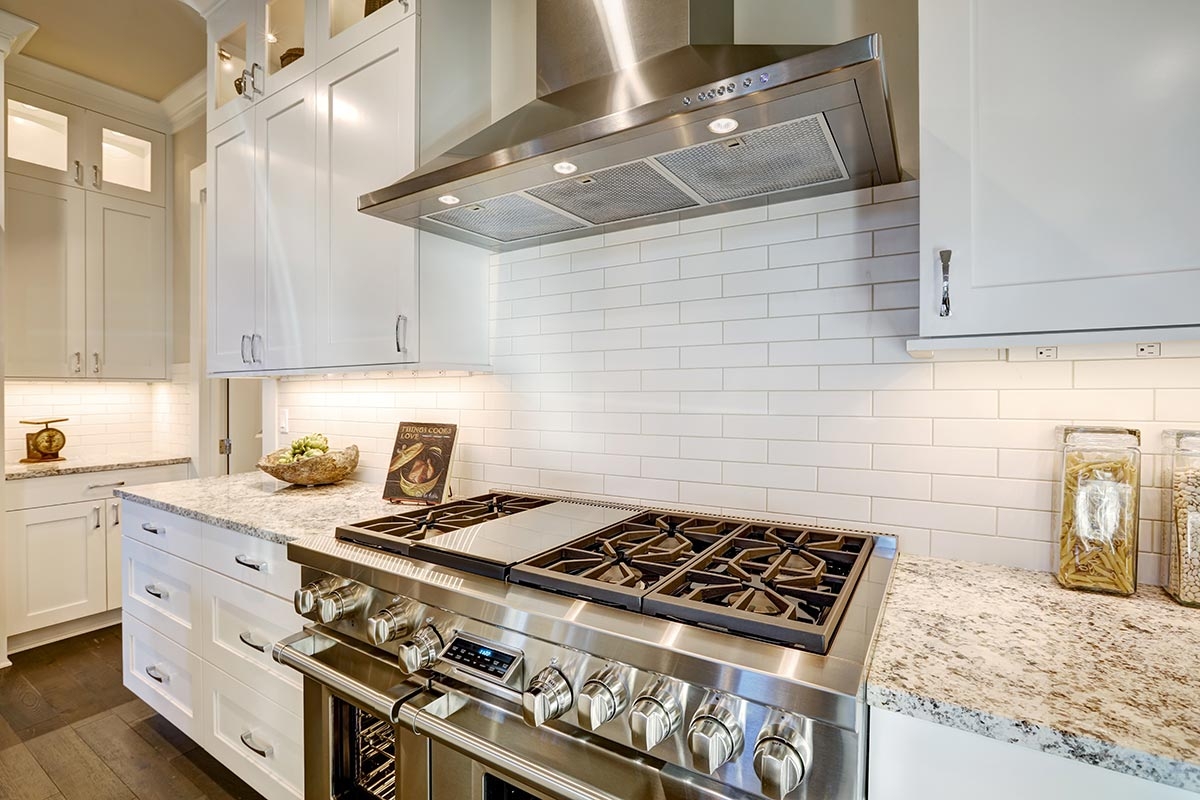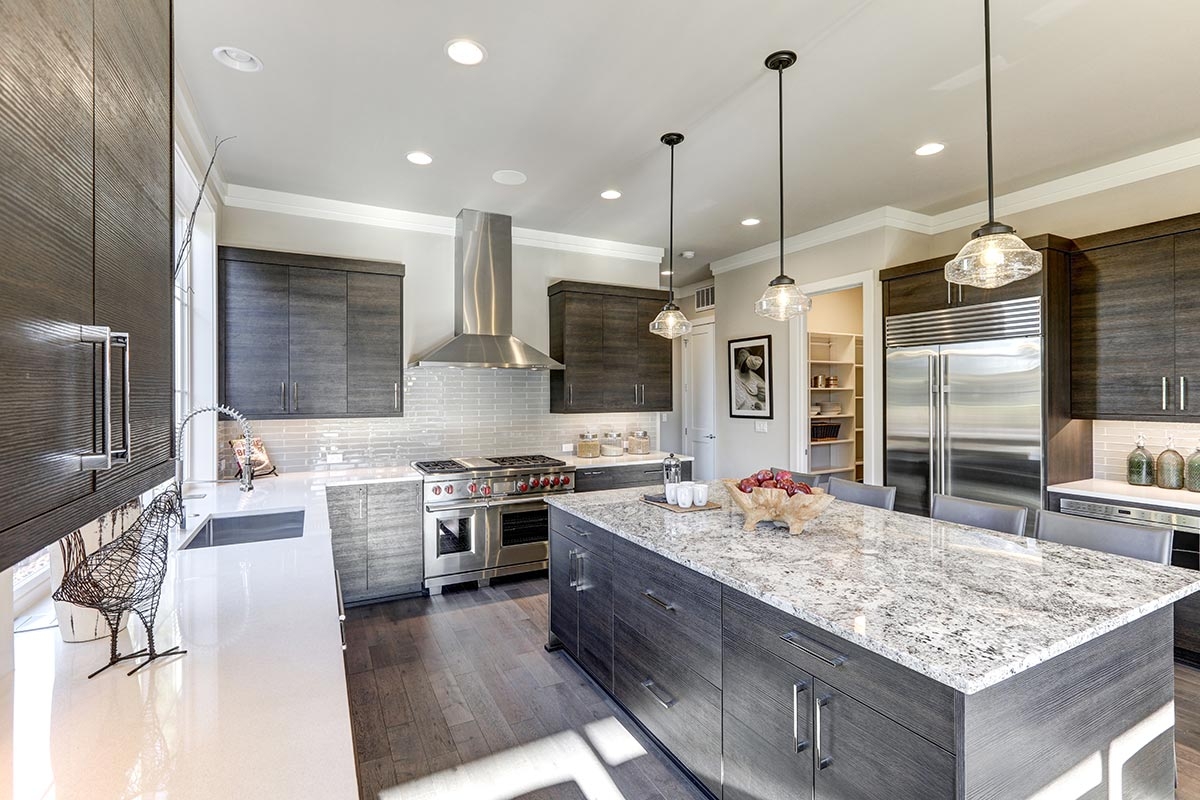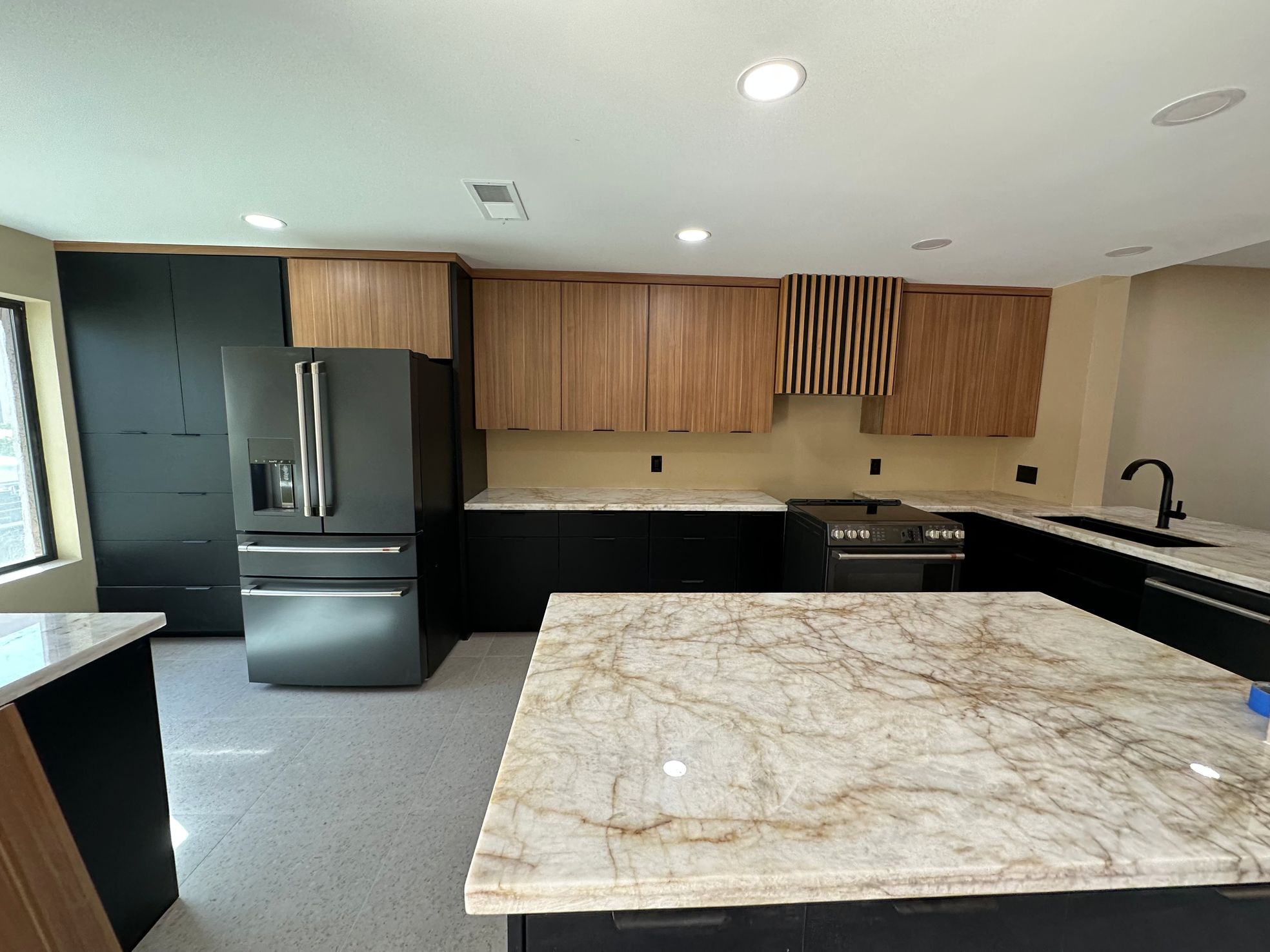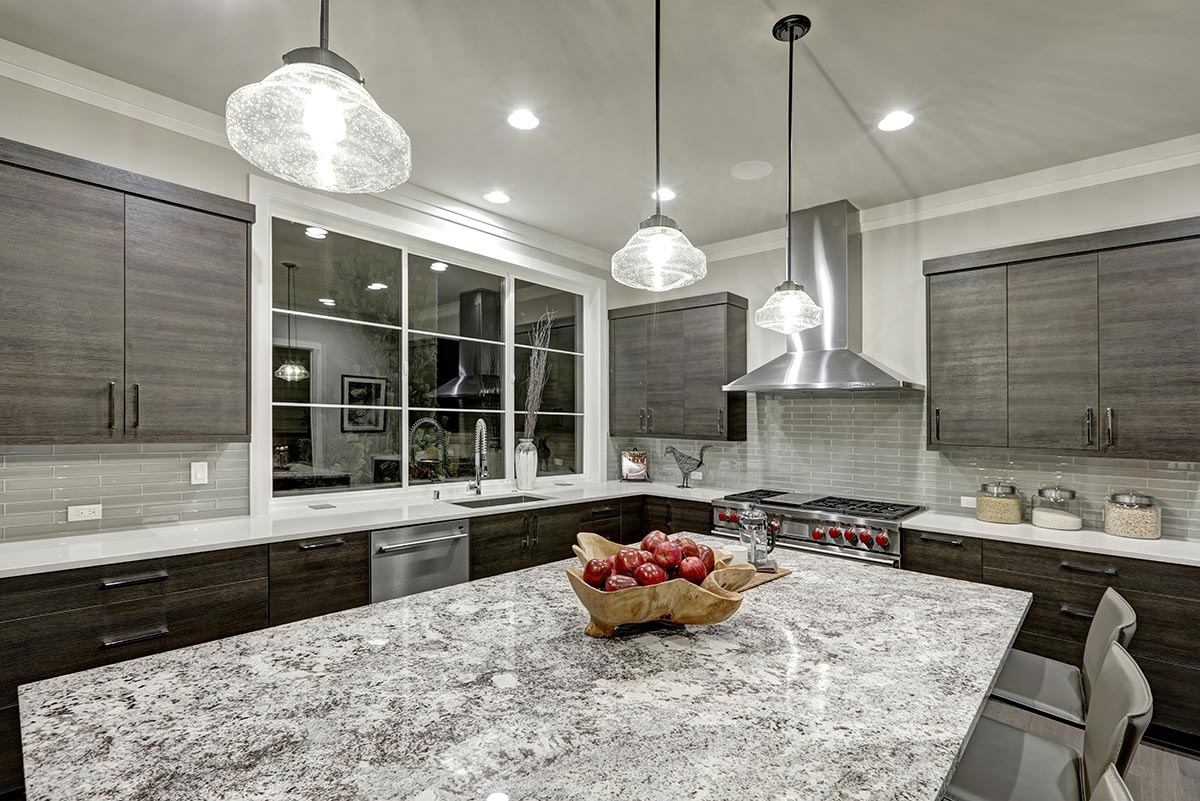
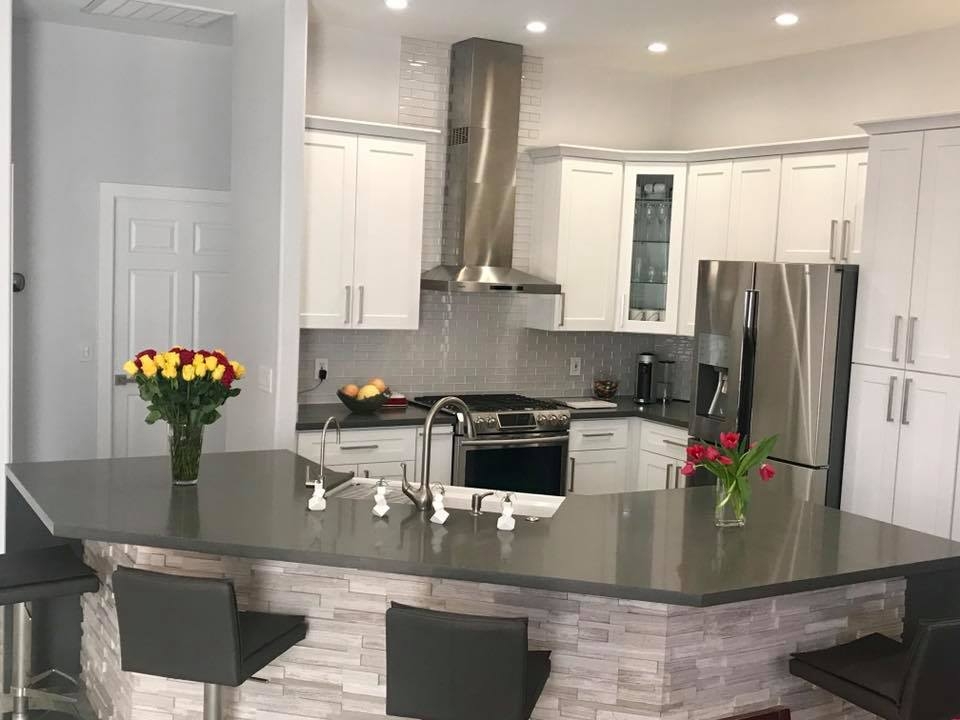
Choosing new countertops is one of the biggest decisions you will make during a kitchen or bathroom remodel. Color is important, but there is much more to consider than whether a slab looks attractive in a showroom.
The right countertop should coordinate with your cabinets, flooring, backsplash, and lighting. You also need to consider seams, vein direction, slab dimensions, surface finish, edge profiles, and how the material will be fabricated.
Start by Choosing Between Granite and Quartz
Granite Slabs
Granite is a natural stone formed beneath the earth's surface. Every slab has its own colors, patterns, and movement, so even two slabs with the same product name may look different. Because granite is porous, it usually needs to be sealed periodically. Granite is a good option for homeowners who want:
- A natural stone surface
- Unique colors and patterns
- Strong heat resistance
- A wide range of finishes
Quartz Slabs
Quartz countertops are engineered using natural quartz minerals, resins, and pigments. Because they are manufactured, quartz colors and patterns are generally more consistent than granite. Quartz is often a good choice for homeowners who want:
- Consistent colors and patterns
- Low-maintenance countertops
- A surface that does not normally require sealing
Standard indoor quartz is not recommended for outdoor countertops in Arizona's harsh climate. Extended heat and direct sunlight may affect the resins and pigments. Premium products such as the Caesarstone Outdoor Collection use UV-resistant and weather-resistant technology designed for exterior applications.
Decide What Look You Want Before Visiting a Showroom
Decide whether you want the countertops to be a quiet background surface or the main design feature. Subtle slabs may include fine speckling, soft movement, and low-contrast veining. Dramatic slabs may feature large veins, strong color changes, and unique mineral deposits. Also consider your cabinets, and bring cabinet, flooring, paint, and backsplash samples whenever possible.
View the Full Slab Instead of Relying on a Small Sample
A small sample can help you identify the general color and texture, but it may not show the complete pattern. A full granite slab can include:
- Large veins
- Light and dark areas
- Mineral deposits
- Natural fissures
- Color variation
Quartz is usually more consistent, but large-scale designs can still look very different across an entire slab. Stand several feet away to see the overall design, then move closer to inspect the pattern and finish.
Visit Stone Distributors and Showrooms Across the Phoenix Area
Customers looking for full slabs should visit local stone distributors and showrooms. When you select a slab, reserve it and tell the distributor which fabricator you are working with. Phoenix-area distributors commonly worked with include MSI Phoenix, Aracruz Granite, The Yard, The Stone Collection, Arizona Tile, Stone Quarry, Bolder Image, and Daltile. Call ahead to confirm hours, inventory, and how many matching slabs are available.
Look at the Slab Under Different Lighting
A white quartz slab may appear bright white under showroom lights but slightly warm or cool inside your home, and cream, gray, beige, and taupe are especially sensitive to surrounding colors. Compare slabs under showroom lighting, natural daylight, warm interior lighting, and cool LED lighting.
Consider Vein Direction and Slab Layout
Vein direction affects the appearance of kitchen islands, long countertop runs, waterfall edges, full-height backsplashes, and bathroom vanities. Approving the slab layout before fabrication shows which sections will appear in each part of the finished countertop and prevents an important vein from being lost inside a sink or cooktop cutout.
Make Sure You Have Enough Material
Square footage does not always determine how many slabs a project needs. The number may be affected by slab dimensions, island size, vein direction, seam placement, cutouts, waterfall panels, and areas of stone that should be avoided. If multiple slabs are needed, select natural stone from the same bundle or quartz from the same production batch.
Ask Where the Seams Will Be Located
Some countertops can be fabricated in one piece, while others require seams. Placement depends on slab size, countertop dimensions, kitchen layout, sink and cooktop locations, and access to the home. Seams cannot always be made invisible, but proper fabrication and color-matched adhesive make them less noticeable.
Understand Natural Fissures, Pits, and Color Variation
Granite is a natural material, so small pits, mineral deposits, fissures, and variations are not always signs of damage. A fissure is a naturally occurring line that may look like a crack but does not always affect the strength of the slab. Ask whether the slab has areas that should not be used, since those can often be hidden inside a cutout.
Compare Polished, Honed, and Leathered Finishes
- Polished finish - a smooth, reflective surface that brings out the depth and color of the material.
- Honed finish - a softer, matte appearance, though it may show oils and fingerprints differently.
- Leathered finish - a textured surface that adds character, often used with darker granite, and helps hide fingerprints.
Consider a Remnant for Smaller Projects
Remnants are pieces left from larger slab projects that are still large enough for smaller countertops, such as bathroom vanities, laundry counters, bar tops, and fireplace surrounds. A remnant reduces material waste and may lower the material cost.
Common Slab Selection Mistakes to Avoid
- Choosing a material from a small sample without viewing the full slab
- Ignoring cabinet, flooring, backsplash, and paint undertones
- Selecting a slab before confirming the project measurements
- Forgetting to discuss seams
- Choosing dramatic veining without reviewing the layout
- Failing to confirm that enough matching material is available
- Using standard indoor quartz in an outdoor Arizona setting