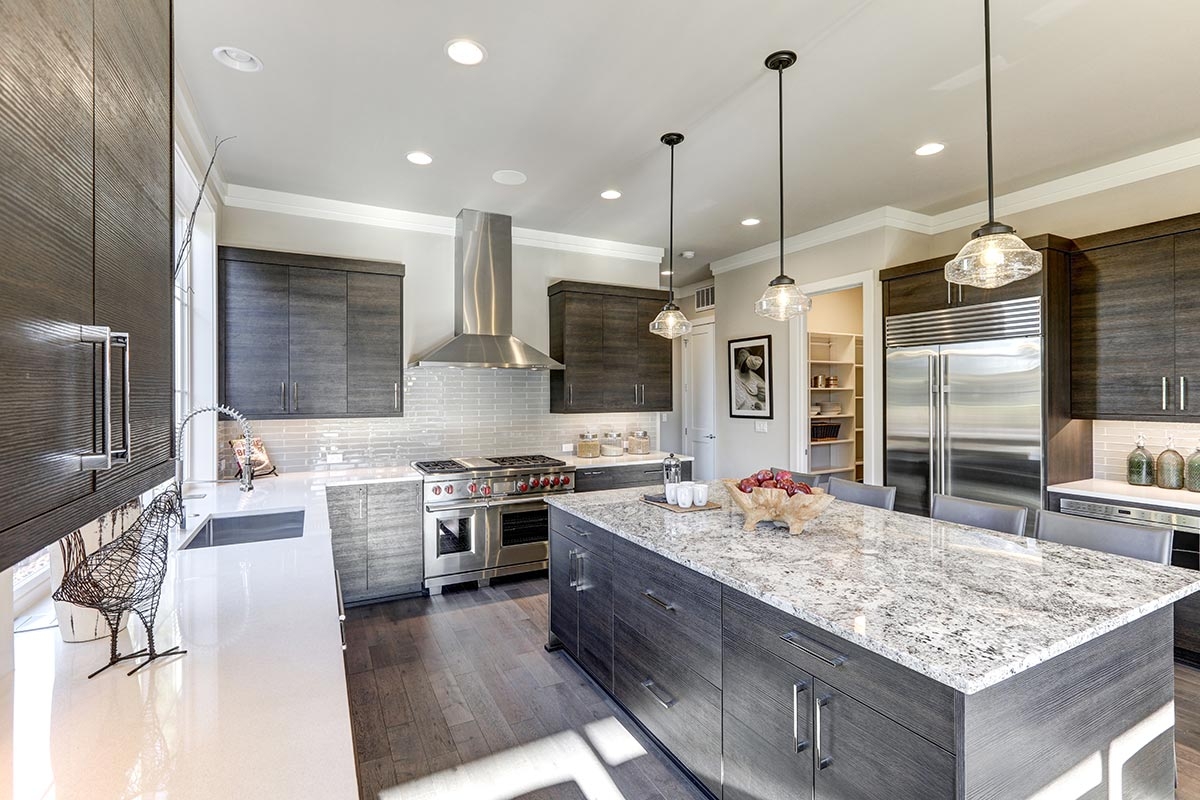
Quartz and quartzite are often confused because their names sound similar. However, they are very different countertop materials.
Quartzite is a natural stone that is quarried from the earth and cut into slabs. Quartz is an engineered surface made with quartz minerals, pigments, and resins. These differences affect appearance, maintenance, heat resistance, sunlight exposure, and cost.
What Is Quartzite?
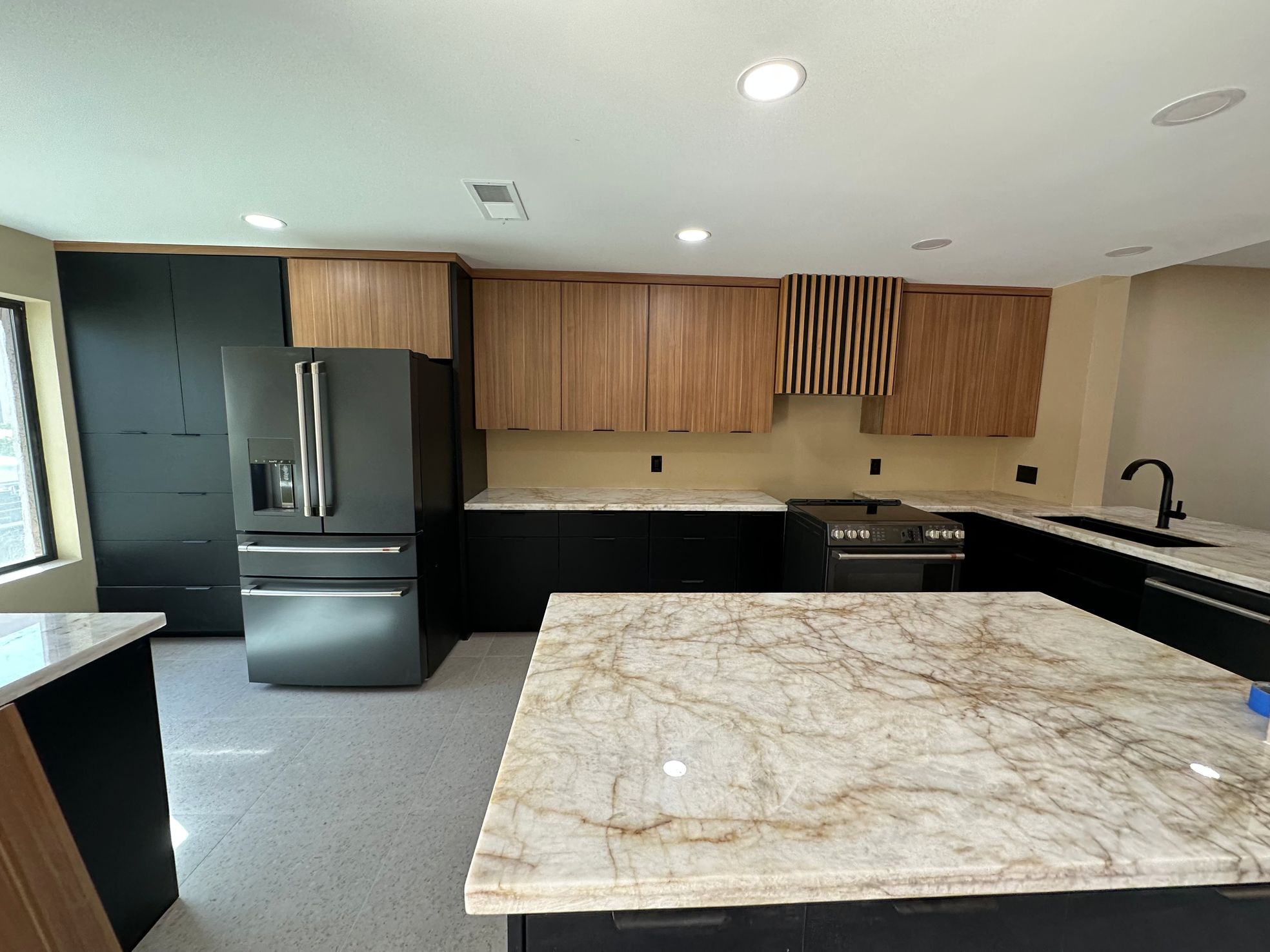
Quartzite is a natural stone that begins as sandstone. Over time, intense heat and pressure transform the sandstone into a dense and durable material. Because quartzite is natural, every slab is different. Colors, veins, and movement vary from slab to slab, even under the same product name.
Quartzite is often selected by homeowners who want:
- A natural stone countertop
- Unique veining and movement
- A high-end appearance
- Strong heat resistance
- A material that may resemble marble
Many quartzite slabs feature white, gray, cream, beige, or earth-tone backgrounds. Some have soft veining, while others have bold patterns that become the main design feature. Quartzite normally requires sealing because it is a natural stone.
What Is Quartz?
Quartz countertops are engineered surfaces made with natural quartz minerals, pigments, and resins. Because quartz is manufactured, the colors and patterns are usually more consistent than natural stone. Quartz is often a good choice for homeowners who want:
- Consistent colors and patterns
- Low-maintenance countertops
- A surface that does not normally require sealing
- Strong stain resistance
- A predictable finished appearance
Quartzite Has a More Natural Appearance
Quartzite has natural depth, mineral variation, and movement that cannot be duplicated exactly. Each slab has its own pattern, and some sections may look very different from others. This variation is part of the appeal, but it also makes full-slab viewing important. A small sample may not show large veins, color changes, fissures, or crystalline areas.
Quartz Offers Greater Pattern Consistency
Quartz is generally more predictable because it is manufactured. A sample usually provides a better idea of how the finished countertop will look, although full slabs should still be viewed when possible. Its consistency makes it easier to coordinate:
- Kitchen islands
- Long countertop runs
- Backsplashes
- Waterfall edges
- Multiple bathroom vanities
Which Material Handles Arizona Heat Better?
Quartzite generally handles heat better than quartz because it is natural stone. However, that does not mean hot pans should be placed directly on quartzite countertops. Trivets and hot pads should be used with both materials.
Quartz contains resins that can be damaged by concentrated heat. Hot cookware, baking sheets, and small appliances that release steady heat should not be placed directly on the surface.
How Arizona Sunlight Affects Quartz and Quartzite
Arizona sunlight is another important consideration, especially in kitchens with large windows or countertops near patio doors. Natural quartzite generally handles sunlight better than standard indoor quartz.
Standard indoor quartz is not recommended for outdoor use in Arizona's harsh climate. Prolonged UV exposure may cause fading, yellowing, or changes in the color of the resin. Certain premium products, such as the Caesarstone Outdoor Collection, are made with specialized UV-resistant and weather-resistant technology for exterior applications.
Quartz Is Easier to Maintain
Because it is nonporous, quartz does not normally need to be sealed. Daily cleaning usually requires only mild soap, water, and a soft cloth. Avoid using:
- Abrasive pads
- Harsh chemicals
- Strong solvents
- Direct heat
- Knives without a cutting board
Quartzite Requires Sealing and More Care
The sealing schedule depends on the slab, the type of sealer, and how often the countertop is used. Some quartzite slabs are less porous than others, so care instructions should be based on the actual material selected. Spills should be wiped up promptly, especially oils, wine, coffee, and citrus. Quartzite should be cleaned with a stone-safe cleaner or mild soap and water.
Which Material Is More Durable?
Both quartz and quartzite are durable, but they can be damaged in different ways. Quartzite is a hard natural stone with strong scratch resistance, but it may chip along edges or around sink cutouts if struck by a heavy object. Quartz resists many common household scratches and stains, but it is more sensitive to heat because of the resins used during manufacturing.
Quartzite Requires More Careful Slab Selection
Quartzite selection requires more attention because every slab is unique. Before reserving a slab, homeowners should:
- View the complete slab
- Inspect it under different lighting
- Look for natural fissures and filled areas
- Review the direction of the veins
- Confirm that enough matching material is available
- Select slabs from the same bundle when possible
It is also important to confirm that the material is true quartzite. Some stones sold under quartzite-style names may actually be marble or dolomitic marble, which can react differently to acids and may require different care.
Which Material Costs More?
Quartzite often costs more than standard quartz, but pricing varies widely. Quartz pricing may be affected by brand, pattern, slab size, edge profiles, and the number of cutouts. Quartzite pricing may be affected by rarity, country of origin, pattern, availability, and fabrication difficulty. Premium quartz can overlap with quartzite pricing, so compare complete project estimates rather than slab prices alone.
Quartz or Quartzite: Which Should You Choose?
Choose quartz when you want lower maintenance, no routine sealing, consistent colors and patterns, strong stain resistance, and an indoor kitchen or bathroom surface. Choose quartzite when you want natural stone, unique veins and movement, stronger heat resistance, better tolerance for strong sunlight, and a one-of-a-kind appearance.